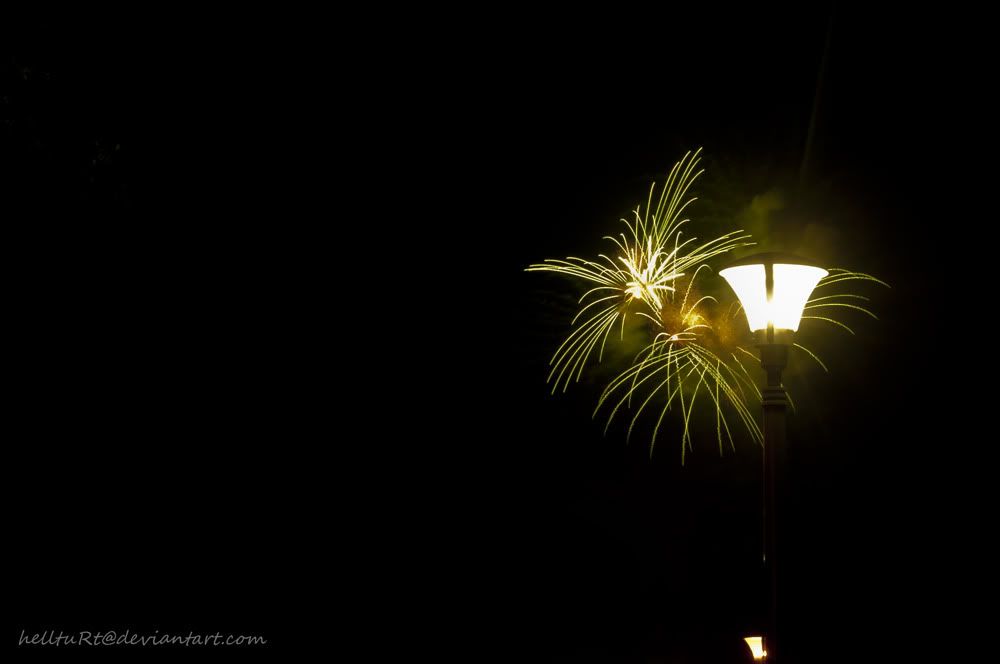
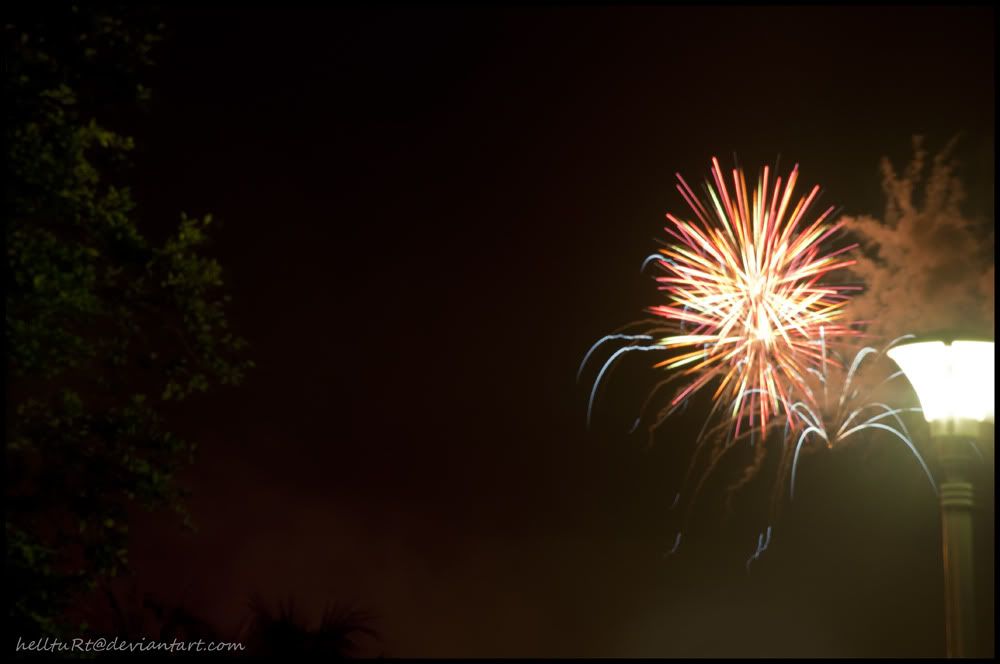
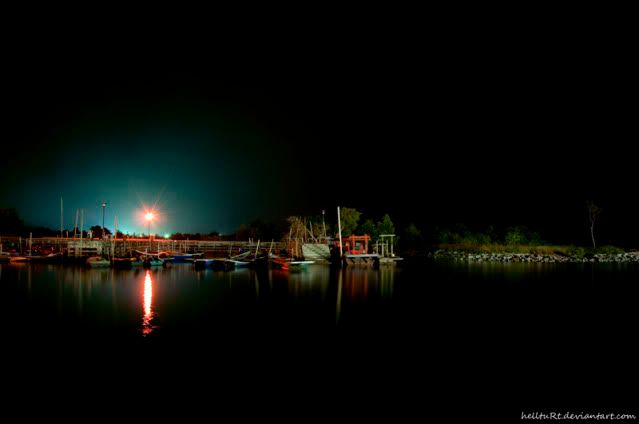
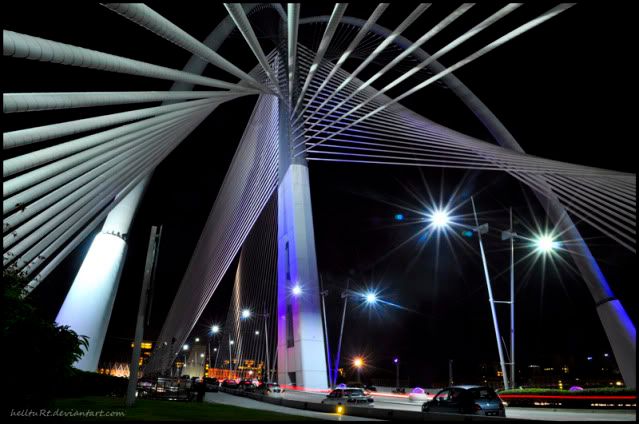
Set the ISO to the highest, attach your longest focal length lens on your camera then take the metering (use spot metering for more accuracy) where the light source is. By using high ISO setting, the sensor will be more sensitive to light therefore giving more accurate reading.
Use a small aperture for deep depth of field ( f/16, f/22) , and adjust the shutter speed until the meter shows perfect exposure.
Then change back to the lowest ISO available, ISO 100/200, and change the shutter speed equivalent to the number of stop that you have drop from the ISO. The idea is to get the same exposure as we did with the highest ISO.
Change your focal length/lens to the one that you prefer for the landscape shoot (usually the wide angle lens), mount the camera on the tripod, set to self-timer or remote, and take the picture.
p/s :: this is the step I take for night shot, it's not 100% accurate but you'll get close to what you want. Feel free to comment if there's any flaw.
By default, your camera is set to front curtain, which means your flash fires at the beginning of the exposure, when the shutter opens.
The rear curtain flash setting let your flash to fire at the end of your exposure, just before the shutter closes. Well, you won’t see a difference at high shutter speeds but you will at slow shutter speeds. Remember what a flash does, it lights up your subject and “freezes” it in time. So if your flash goes off at the beginning of the exposure, you’ll freeze your subject and then the movement for the rest of the exposure will blur right over your “freeze” and it won’t look natural or sharp. If your flash goes off at the end of the exposure, the blur comes first and then you freeze your subject right at the end making it sharp with all the blur “in background” of your frozen subject.
The example of the rear curtain flash, with 1/1.6s handheld :

![illusionist [photo.journalism.design]](https://blogger.googleusercontent.com/img/b/R29vZ2xl/AVvXsEgJTS3oSR1Q1c9Iqy5h67W80b5ZscrAYe2yNDaCx9poM-YyJhgXQTV2oX3y4fhhPfU-Fn5CuXlat9MnWDJcmOmQ5mugNIvDIzoq8HcU1hGF1JUVr63I9Zkzy_9YjUgVVIHbH023wzemGGo/s1600-r/title.png)